
Understand the Paceometer
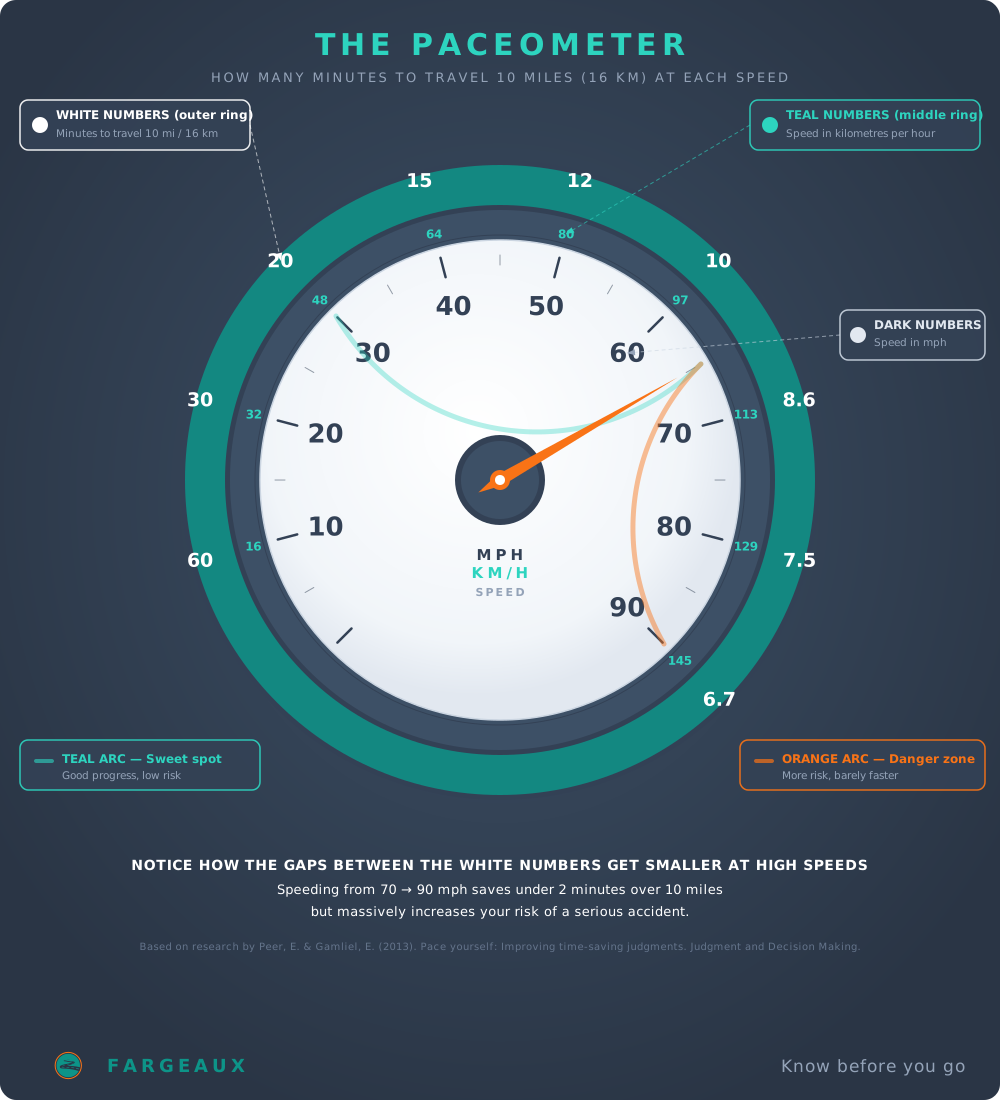
This is a paceometer - and once you understand it, you'll never feel the urge to speed again.
Our brains simply aren't wired to intuitively grasp the inverse relationship between speed and time. The paceometer makes that relationship visible at a glance.
For anyone driving in an unfamiliar country - navigating new road signs, different speed limits, or switching to the opposite side of the road - this matters even more.
The Three Layers of Intelligence
The dial has three layers of numbers. The large dark numbers on the inner dial show your speed in miles per hour. Just outside the dial, the smaller teal numbers show the same speed converted to kilometres per hour — handy if you're used to metric.
The white numbers on the outer teal ring are the key: they show how many minutes it would take to travel 10 miles (16 km) at that speed.
Meaningful Gains
At lower speeds, small increases make a huge difference. Going from 20 mph to 30 mph saves you a full 10 minutes over that distance.
Diminishing Returns
Pushing from 70 mph to 90 mph saves less than 2 minutes. The risk of a serious accident dramatically increases for a negligible time reward.
"People consistently overestimate how much time they'll save by speeding, particularly at higher speeds."
Ease off. Enjoy the scenery.
Know that a comfortable, safe speed is almost always fast enough. Fargeaux helps you master local rules so you can relax and holiday better.