
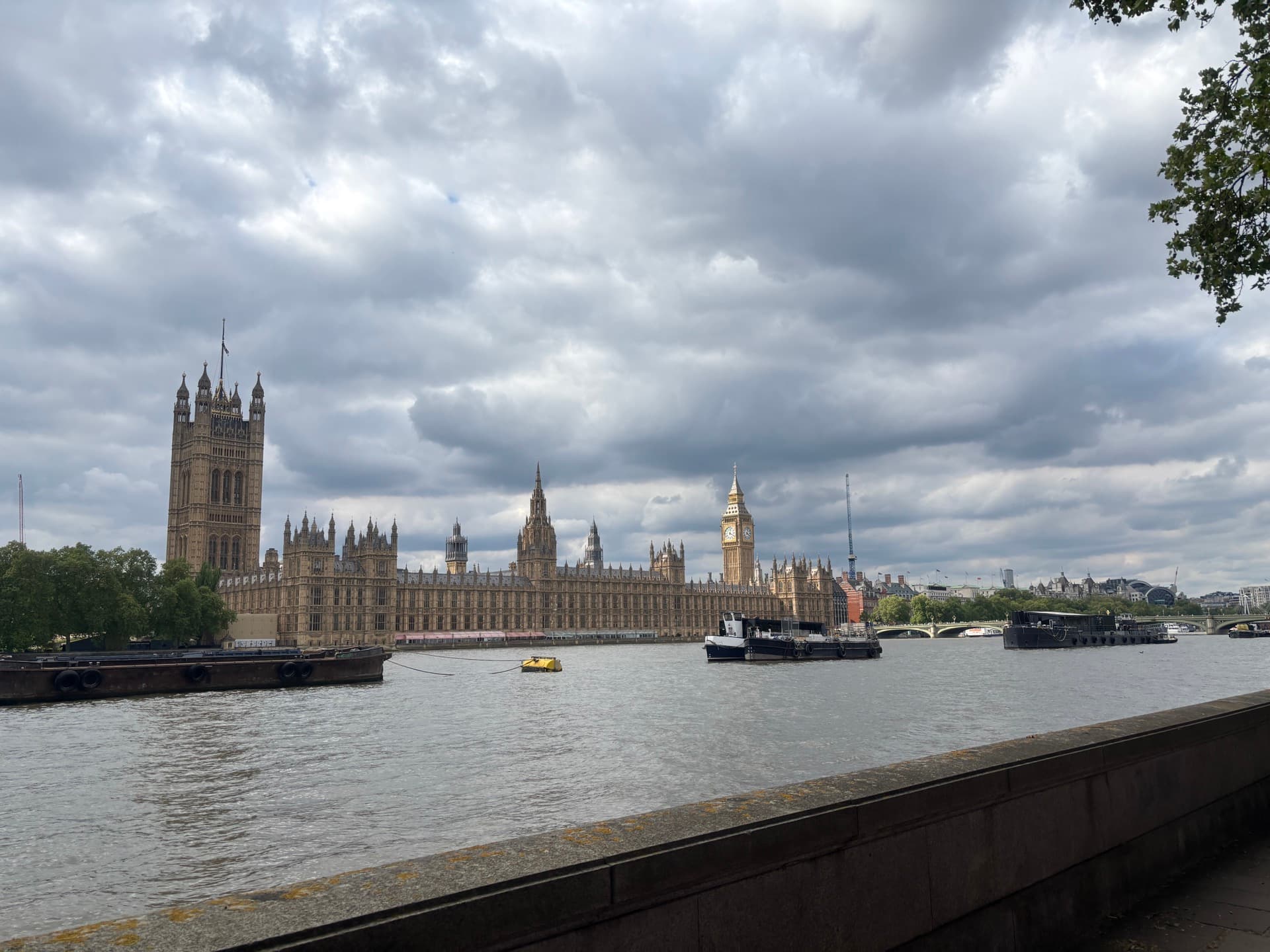
Driving in United Kingdom
Published content · v1.0 · reviewed 20 August 2026
1. Driving INTO the UK - Before you go
2. The first ten minutes
This is when nearly everything goes wrong. Not on a mountain road. In the first ten minutes, in a car park, at the first roundabout.
Off the ferry or the shuttle
Dover, Newhaven, Portsmouth, Poole, Plymouth, Harwich, Hull, or the shuttle at Folkestone. Dover is the sharp end of it. The port exit puts you almost immediately onto the A20 with fast traffic, gradients and freight, and there is very little settling-in distance.
Britain drives on the left. Roundabouts go clockwise. On a roundabout you give way to the right.
Out of the rental lot
Same problem with jet lag added. Heathrow, Gatwick and Manchester all put you onto a fast dual carriageway within minutes.
Before you move
The first hour
3. The rules that will catch you out
Roundabouts, and a great many of them
Britain uses roundabouts where much of Europe uses traffic lights, including multi-lane roundabouts and roundabouts made of smaller roundabouts.
Priority is not always marked
There is no British equivalent of priorite a droite. If there are no markings and no sign, do not assume you have priority, but equally do not expect an unmarked convention to be operating. Priority here comes from one of three things: the roundabout rule, the markings and signs, or negotiation when there are none.
Merge in turn
Two correct behaviours, depending on speed, and the Highway Code distinguishes them.
Indicate every time, merging or changing lanes
The cultural part is the real content
Britain's queueing instinct means many drivers treat the empty lane as cheating and will deliberately close the gap. A lorry straddling both lanes is not unusual.
You are entitled to use both lanes in slow traffic. Do not force it, indicate clearly, and acknowledge whoever lets you in. A raised hand in thanks is close to obligatory and its absence is noticed.
Pedestrians come first
The Highway Code puts pedestrians at the top of a hierarchy of road users, and two rules surprise visitors:
Red X means the lane is closed
On a motorway gantry, a red X over a lane means do not drive in it, and it is enforced by camera. This is a rule.
Speed limits
In miles per hour. The national limits, unless a sign says otherwise:
| Road | Cars |
|---|---|
| Motorway | 70 mph : 113 km/h |
| Dual carriageway | 70 mph : 113 km/h |
| Single carriageway outside built-up areas | 60 mph : 97 km/h |
| Built-up areas, unless signed otherwise | 30 mph : 48 km/h |
NOTE
1 - Wales has a 20 mph default in most built-up areas rather than 30. Scotland and Northern Ireland have their own variations too. The sign always wins.
2 - Towing lowers your limits, and vans and larger vehicles have their own set. If you are towing or driving anything other than a car, look up the current figures for your vehicle type and weight before you travel rather than assuming the car limits apply.
Alcohol
Scotland has a lower limit than England, Wales and Northern Ireland. Given you may cross a border without noticing, treat the answer as none. You are a tourist, be safe.
What to carry
4. Reading the road
Sign colours tell you the road type
| Colour | Road |
|---|---|
| Blue | Motorway. M roads. |
| Green | Primary route. Main A roads. |
| White with black border | Local road. Minor A and B roads. |
| Brown | Tourist attraction. |
| Yellow | Temporary. Roadworks and diversions. |
NOTE
1 - Some motorway exits break into smaller exits with letters identifying them, similar to Autoroute exits in France, uncommon in some other countries around the world.
2 - Speed limit signs are infrequent, and may be different to your gps speed notifications. A road sign wins, or if you are not sure go a bit slower than other traffic around you, Not faster! There are Many speed cameras.
5. Fuel
The label shape on the nozzle and the pump is the reliable guide. Handle colours vary between brands, so do not trust colour alone.
Circle means petrol. Square means diesel.
| Label | What it is |
|---|---|
| E10 (circle) | Standard unleaded petrol. Not suitable for some older cars. |
| E5 (circle) | Super unleaded petrol. |
| B7 (square) | Standard diesel. |
| XTL (square) | Paraffinic diesel. Only if the vehicle allows it. |
| LPG | Liquefied petroleum gas. Converted vehicles only. |
NOTE
1 - Supermarket forecourts are cheaper than motorway services.
2 - Fuel is sold in litres, but fuel economy is talked about in miles per gallon, which pleases nobody.
6. Electric cars
7. Toll Charges with no toll booth
Britain has very few toll barriers. Instead, cameras read your number plate and you pay online, usually by a deadline. Miss it and a penalty follows, which on a hire car arrives later via the rental company with an administration fee on top. Check your route every night you have been driving and pay online accordingly.
The Dartford Crossing
The Dartford Crossing is east of London, where the M25 crosses the Thames. Two tunnels northbound, a bridge southbound. There are no toll booths and you cannot pay at the crossing.
This is the single most common way a visitor picks up a penalty in Britain without noticing.
Paying is your responsibility, and nobody will remind you
There is no barrier, no ticket and no booth. Nothing happens at the moment you cross, so there is nothing to prompt you.
You must go online and pay it yourself, by the deadline. A camera has already read your plate.
The system does not distinguish forgetting from evading.
France now has the same arrangement on a growing number of motorways, so this is a habit worth carrying in both directions.
Look it up rather than trusting a printed figure
Charge amounts, charging hours, and the vehicle restrictions all change.
Check the official Dart Charge page for the current position before you drive it.
Other charging crossings
The Tyne Tunnel at Newcastle, the Mersey tunnels at Liverpool, and the Blackwall and Silvertown tunnels in east London all charge. Some use barriers, some are free-flow like Dartford, and the systems have changed more than once.
The general rule to follow: in Britain, assume a large river crossing may be charged and may have no booth. Check the name of the crossing on your route before you drive it.
City charges
London's Congestion Charge and its emission zone, and clean air zones in several other cities, work exactly like Dartford. Cameras, no booths, pay online, penalty if you miss it. A hire car is not automatically registered.
A good habit: before you drive into any British city, check whether it charges. There is an official vehicle checker that tells you whether your specific vehicle pays.
8. Parking
On street
Disc zones
Common in Scotland and in parts of northern England. Free parking, time limited, and you must display a disc showing your arrival time.
There is no national disc
Each council issues its own branded disc. A European blue disc is not accepted.
Discs are almost always free, from local shops, council offices, tourist information centres, and often from hotels and holiday accommodation in disc towns. Some councils will post one out.
Get one before you park. Some enforcement officers will hand one over if approached, but that is goodwill, not a right.
Displaying no disc, showing a false arrival time, altering the time once set, or overstaying are all enforceable. Ask at the car rental, they may keep them on hand.
Car parks
9. Tunnels and crossings
Britain has no Alpine tunnels. The tunnels here are mostly urban river crossings, and the payment trap above is the main event. The driving habits are the same as anywhere:
10. Motorhomes, campervans and overnight stops
There is no Aires network
If you are coming from France, this is an adjustment. Britain has nothing equivalent. No dense network of municipal motorhome stops, mostly free, in every village.
Do not plan a British trip on French assumptions.
What Britain has instead is a network of small private members' sites, a couple of schemes, and a legally grey area around roadside parking.
The two clubs
Small sites, typically capped at five vans, on farms, in gardens and behind pubs. Thousands of them, and the closest thing to an aire in character: cheap, small, rural, often lovely. They are members-only, and the two clubs have confusingly similar names.
The Caravan and Motorhome Club
Formerly The Caravan Club. Its small sites are called Certificated Locations, or CLs.
The Camping and Caravanning Club
A separate organisation. Its small sites are called Certificated Sites, or CSs, capped at five caravans or motorhomes plus ten tents, and inspected annually.
If you are visiting from abroad, start here
The Camping and Caravanning Club offers a Digital Overseas Membership covering a full year, giving access to all sites including Certificated and Listed sites plus the online members' area.
That solves the thing that actually breaks for an overseas traveller: a physical membership card posted to a UK address you do not have.
Both clubs also allow joining on arrival, one by phone and one on site. Joining ahead is still better, because you get a card, an app login and the ability to plan a route rather than hope.
Other options
Pubs, farm shops and breweries offering a free overnight stop for self-contained motorhomes, on the understanding that you will probably buy something. The closest thing Britain has to France Passion. Requires buying the current guide.
Wild camping, and the Scotland misunderstanding
In England, Wales and Northern Ireland, sleeping in a vehicle on a public road or in a car park is not a general right. Some places tolerate it, many councils have specific bans with signage, and coastal and beauty-spot car parks increasingly have height barriers and overnight restrictions.
In Scotland, the Land Reform legislation gives a broad right of responsible access, but it applies to access on foot, by bike and similar. It does not give motorhomes a right to park and stay overnight.
This is very widely misunderstood by visitors, and the misunderstanding has caused enough friction in popular areas that several have introduced permit schemes or restrictions. Treat overnight stopping outside a site as something you seek permission for, not something you are entitled to, and check the local authority's current position for wherever you are heading.
Towing and driving something big
Apps
Works in Britain but is far thinner than in France, and listings are more likely to be tolerated spots than official ones. Read the reviews carefully. Searchforsites and the two club apps are the UK-specific alternatives.
11. The four nations
The United Kingdom is not one rulebook. Most of the road rules are shared, but enough differ that a visitor should know the differences exist.
You can cross from England into Wales or Scotland without noticing. The signs change, but there is no border control and it is easy to carry the wrong assumption across.
12. When not to drive
Timing matters as much as place.
Build up your confidence in order: quiet rural roads and small towns, then motorways, then regional cities, then dense centres, and treat single-track lanes in a large vehicle as a separate skill.
13. If something goes wrong (carry the Fargeaux UK printout in the glovebox)
Emergency numbers
| Number | Who |
|---|---|
| 999 | Any emergency. Police, ambulance, fire, coastguard. |
| 112 | Works exactly the same as 999. Use whichever you remember. |
| 101 | Police, non-emergency |
| 111 | NHS, urgent medical advice when it is not an emergency |
| 18000 | Text relay for deaf and hard of hearing callers |
Give your location first: road number, direction of travel, last junction number, nearest marker post.
Breaking down
After a crash
14. Download before you leave home
Set these up on wifi at home, while you still have your usual phone number for verification codes.
| What for | UK |
|---|---|
| Navigation | Google Maps with offline maps downloaded, or Waze |
| Parking | RingGo. Your European parking app will not work here. |
| Charges | The official clean air zone vehicle checker, bookmarked |
| EV charging | Zapmap, PlugShare |
| Motorhome | The two club apps, Britstops, Searchforsites |
| Your hire company | Their own app, for roadside assistance and the agreement |
15. Taking a UK car abroad
For UK residents driving their own car out of the country. If you are visiting Britain, skip this section.
Since September 2021 the UK's international identifier is UK, not GB.
Where to buy
The trap, and one thing to check per country
Old GB stock stayed on sale in petrol stations long after the change, so a sticker bought recently is not automatically the right one. If it says GB, it is wrong.
A few countries require a physical sticker regardless of what the plate shows, and at least one requires none at all. Check the current requirement for every country on your route on the official GOV.UK page before you travel.
16. Coming into Britain: documents
Fees, validity and the list of who needs one have all changed since the scheme began. Apply well before travel, not at the port, and check the current requirement on the official page.
17. France and Britain, side by side
So many of the differences are mirror images that they are easier to learn as pairs than as separate facts. If you are driving both countries on one trip, this is the table to read twice.
| France | United Kingdom | |
|---|---|---|
| Side of road | Right | Left |
| Roundabouts | Anticlockwise, give way left | Clockwise, give way right |
| Overtake on | Left | Right |
| Unmarked junction priority | Priorite a droite may apply, so traffic from your right has it | Nobody has priority, so do not assume you do. Highway Code Rule 146. Negotiate and give way |
| Indicating | Legal duty, licence points, camera enforced | Advisory in the Highway Code, but careless driving offences apply |
| Merging | No zip merge rule. Traffic on the carriageway has priority. | Merge in turn at low speed. Move over early at speed. |
| Speed and distance | km/h and kilometres | mph and miles |
| Tolls | Mostly barriers, but a growing number of barrier-free sections you must pay online within 72 hours | Almost no barriers. Camera charges on some crossings and in cities, paid online by a deadline. |
| Hi-vis vest | One per vehicle required by law | Not required at all. Carry one each anyway. |
| Warning triangle | Required | Not required, and must NOT be used on a motorway |
| Accident form | Constat amiable, in the glovebox | None. Exchange details yourself. |
| Emission sticker | Crit'Air sticker stuck to bottom right of windscreen, needed for 30+ ZFE cities (check your hire car has one) | No sticker. Camera-enforced zones, may be signs, pay online. |
| Parking app | EasyPark, PayByPhone | RingGo. Your French app will not work. |
| Parking disc | One national European disc, about a euro | No national disc. Council-issued, usually free. |
| Motorhome stopping | Dense network of free or cheap aires | No aires. Members' club sites, book ahead. |
| Motorway services overnight | Avoid. Theft risk. | Normal, permitted, charged for. |
18. Take it with you
A one-page sheet for the glovebox. Emergency numbers, what to do after a crash or a breakdown, fuel labels, and a space to write in your own hire car details. Designed to work with no phone signal at all.
And when you want to Really destress your holiday, actually learn the signs and the road markings rather than look them up, that is what the Fargeaux app is for, to make your holiday better.
Sources: UK government sources including GOV.UK and the Highway Code, National Highways, and the two caravan clubs. This guide is original writing by Fargeaux and is general guidance, not legal advice. Rules differ in places between England, Scotland, Wales and Northern Ireland, and they change: always check the official source before you travel.
Driving in the UK - Glovebox Sheet
One page, print-ready, works with no phone signal. Free, no email required.